
Dussehra Festival: Why Millions Celebrate This Auspicious Day
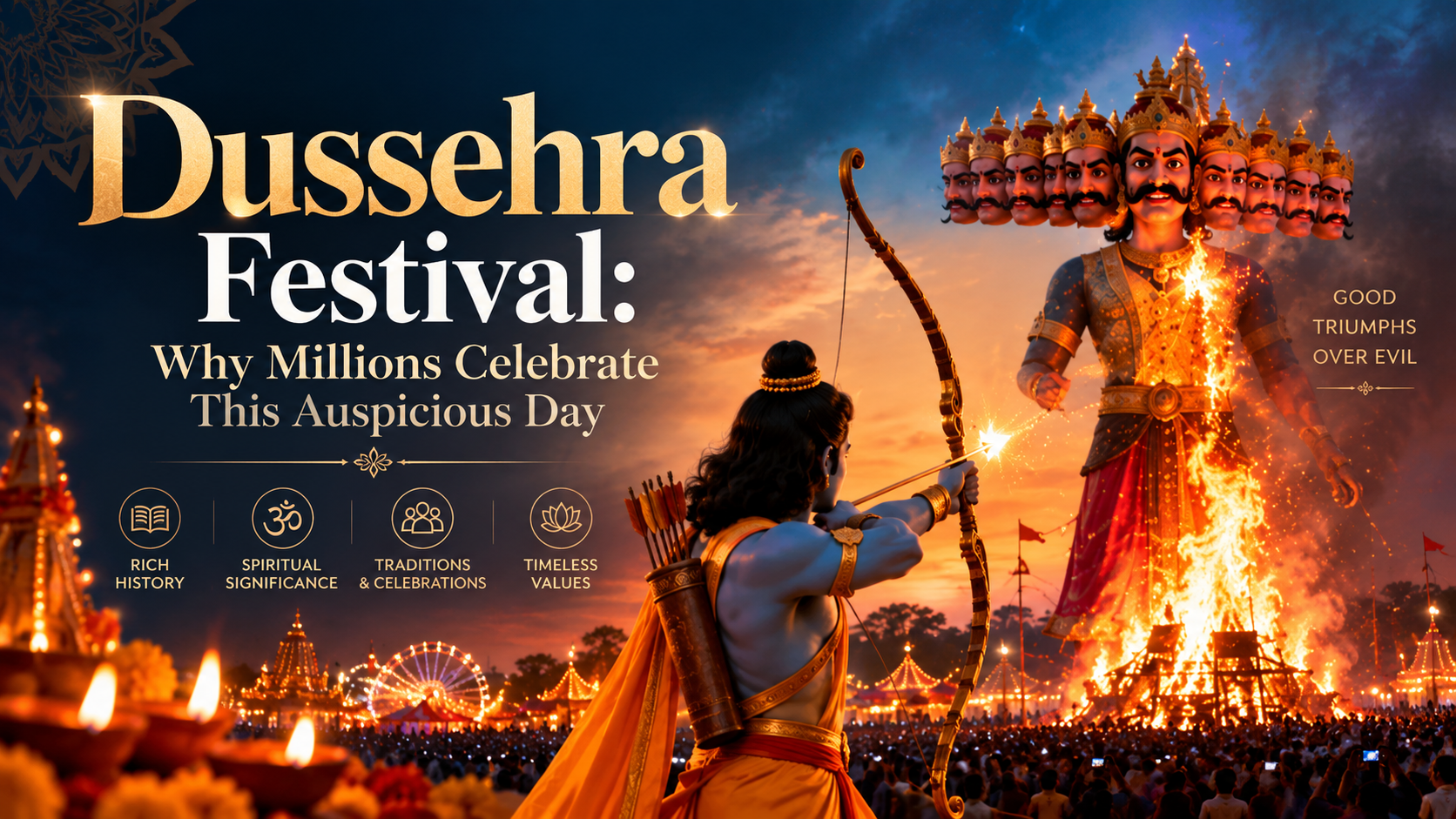
Every year, the festive season in India brings colourful decorations, family gatherings, traditional performances and a celebration that carries a message far beyond its grand festivities.
Dussehra, also known as Vijayadashami, is one of the most meaningful Hindu festivals, celebrated by millions of people across India and around the world.
From the spectacular burning of Ravana effigies in northern India to the magnificent Mysuru Dasara celebrations and the final rituals of Durga Puja in eastern India, Dussehra brings different traditions together around one powerful idea.
Good ultimately triumphs over evil.
But Dussehra is more than a festival of ancient stories. For many families, it represents courage, hope, gratitude, new beginnings and the importance of making the right choices.
Whether you are celebrating in India, spending the festive season with family in Dubai or simply curious about Indian traditions, understanding Dussehra reveals why this auspicious day continues to mean so much to millions of people.
What Is the Dussehra Festival?
Dussehra is an important Hindu festival that celebrates the victory of good over evil and righteousness over wrongdoing.
It is also widely known as Vijayadashami or Dasara, depending on the region and local language.
The festival falls on the tenth lunar day of the bright fortnight of the Hindu month of Ashwin, generally occurring in September or October.
Dussehra follows the nine-night Navratri festival, during which devotees worship the goddess Durga and her different forms.
The name Vijayadashami is commonly interpreted as:
Vijaya – Victory
Dashami – Tenth day
Together, the name conveys the idea of victory on the tenth day.
Although the celebrations vary considerably between communities, the underlying message remains remarkably consistent.
Dussehra is an occasion to reflect on the victory of truth, courage and goodness.
When Is Dussehra in 2026?
Dussehra 2026 falls on Tuesday, October 20, 2026, in Dubai and most parts of India.
Some regional observances, including Bengali Vijayadashami, take place on Wednesday, October 21, 2026.
The festival follows the Navratri celebrations, which begin on October 11 in 2026.
Unlike festivals that follow a fixed Gregorian calendar date, Dussehra is determined according to the Hindu lunar calendar. This is why the date changes from year to year.
For devotees in the UAE, the festival remains an important cultural and religious occasion, whether celebrated through prayers, family gatherings or community events.
Why Is Dussehra Celebrated?
The meaning of Dussehra comes from two important narratives in Hindu tradition.
Both stories celebrate the victory of divine goodness over destructive forces, although different regions place greater emphasis on different traditions.
1. Lord Rama's Victory Over Ravana
One of the best-known stories associated with Dussehra comes from the ancient Hindu epic, the Ramayana.
According to the epic, Ravana, the ten-headed king of Lanka, abducted Sita, the wife of Lord Rama.
Rama, accompanied by his brother Lakshmana and supported by Hanuman and an army of allies, fought to rescue her.
After a long and difficult battle, Rama defeated Ravana.
This victory became a powerful symbol of righteousness overcoming arrogance, injustice and evil.
In many parts of northern India, the festival celebrates this moment through performances, processions and the burning of Ravana effigies.
2. Goddess Durga's Victory Over Mahishasura
Another important tradition connects Vijayadashami with the goddess Durga.
According to Hindu mythology, the powerful demon Mahishasura threatened the balance of the world.
Goddess Durga battled him and ultimately defeated him, restoring righteousness.
This narrative is especially significant in communities that celebrate Durga Puja and worship the divine feminine.
Her victory represents strength, determination and the power to overcome injustice.
Although the stories differ, their shared message helps explain why Dussehra is celebrated so widely.
Why Is Dussehra Considered an Auspicious Day?
For many Hindu families, Dussehra is considered an especially favourable occasion for positive beginnings.
The festival represents the triumph of dharma, often understood as righteousness, duty and moral order.
This makes the day meaningful for people planning an important step in life.
Depending on regional customs, families may observe the occasion by:
Beginning a new educational journey
Starting a business or important project
Offering prayers for prosperity and wellbeing
Worshipping tools, books or instruments used in daily work
Seeking blessings from elders
Preparing for a fresh chapter in life
One tradition, Ayudha Puja, involves honouring the tools, equipment or instruments that support a person's livelihood.
The practice reflects gratitude for work, knowledge and the resources that make everyday life possible.
For many devotees, the day is not simply about hoping for success. It is also about approaching new responsibilities with discipline and good intentions.
What Does Dussehra Symbolize?
Behind the music, decorations and celebrations is a message that still feels relevant today.
Dussehra encourages people to recognise the difference between right and wrong and to overcome negative qualities within themselves.
In one popular symbolic interpretation, Ravana's ten heads represent human weaknesses such as:
Anger
Greed
Pride
Jealousy
Selfishness
Arrogance
Attachment
Dishonesty
Cruelty
Ego
This interpretation is not the only religious understanding of Ravana's ten heads, but it has become a familiar way of explaining the festival's moral lessons.
The symbolic destruction of evil reminds people that personal growth often requires leaving harmful habits behind.
For some, that means becoming more patient. For others, it may mean repairing a relationship, making a difficult but necessary decision or simply treating others with greater kindness.
That personal meaning is one reason the festival continues to connect with different generations.
How Is Dussehra Celebrated in India?
Dussehra is celebrated in many different ways across India.
Some communities organise enormous public festivities, while others focus on prayers and family traditions.
The celebrations may include religious ceremonies, dance, music, theatrical performances, traditional food, festive clothing and community gatherings.
Ramlila: Bringing the Ramayana to Life
One of the most recognisable traditions is Ramlila, a dramatic performance of episodes from the Ramayana.
These performances combine storytelling, music, dialogue and elaborate costumes.
Audiences follow the journey of Lord Rama, the challenges he faces and the events leading to his victory over Ravana.
Some performances take place over several days, while others follow longer local traditions.
Ramlila is also recognised by UNESCO as an element of the Intangible Cultural Heritage of Humanity.
For many families, attending these performances is an annual tradition that brings generations together.
Ravana Dahan: The Burning of Ravana Effigies
In many northern Indian communities, Dussehra celebrations culminate in Ravana Dahan.
Large effigies of Ravana, sometimes accompanied by figures representing Kumbhakarna and Meghnad, are displayed at public festival grounds.
After a dramatic reenactment of the Ramayana, the effigies are ceremonially set alight in organised public celebrations.
The event symbolizes the destruction of evil and the victory of righteousness.
The spectacle may attract large crowds, with music, festive markets and community activities taking place around the main ceremony.
However, effigy burning is not part of every Dussehra tradition. Different regions observe the festival in their own ways.
Family Prayers and Traditional Rituals
Not every Dussehra celebration involves large crowds or fireworks.
For many households, the festival begins with cleaning and decorating the home, preparing offerings and gathering for prayers.
Families may visit temples, share sweets or seek blessings from elders.
In some communities, books, musical instruments, vehicles and work equipment are honoured as part of the festival.
These quieter celebrations are equally important because they preserve the spiritual and personal meaning of the occasion.
Dussehra Celebrations Across Different Parts of India
One of the most fascinating aspects of Dussehra is the variety of traditions associated with the festival.
The same auspicious day may look completely different depending on where it is celebrated.
North India: Ramlila and Ravana Dahan
In cities and towns across northern India, theatrical performances and Ravana effigy-burning ceremonies are among the best-known traditions.
Families visit festival grounds, watch performances and enjoy the lively atmosphere.
For children, seeing the enormous decorated effigies can become one of the most memorable experiences of the festive season.
West Bengal: Durga Puja and Vijayadashami
In West Bengal, Vijayadashami is closely connected with the conclusion of Durga Puja.
The occasion is marked by prayers, emotional farewells to Goddess Durga and immersion processions for her idols.
For many devotees, it is a moment that combines devotion, celebration and the sadness of saying goodbye until the following year.
Karnataka: The Grandeur of Mysuru Dasara
The city of Mysuru is famous for its elaborate Dasara festivities.
The celebrations feature illuminated landmarks, cultural programmes and ceremonial traditions connected to the city's royal heritage.
Mysuru Dasara is particularly associated with the worship of Goddess Chamundeshwari, a form of Durga.
Its vibrant atmosphere attracts visitors interested in both religious traditions and Karnataka's cultural history.
Himachal Pradesh: Kullu Dussehra
Kullu Dussehra follows a distinctive tradition.
Unlike places where the main festivities conclude on Vijayadashami, Kullu's celebrations traditionally begin around this time and continue for several days.
The festival is known for processions of local deities, traditional music, dance and large community gatherings.
It demonstrates how Indian festivals can preserve their shared spiritual meaning while expressing unique local identities.
South India: Learning, Gratitude and New Beginnings
In several southern Indian traditions, Vijayadashami is associated with education, knowledge and the respectful use of tools.
Families may observe Ayudha Puja, while some communities mark the beginning of children's learning through ceremonies such as Vidyarambham.
In Tamil Nadu, the Navratri season is also known for Golu, the arrangement of decorative dolls and figurines.
These traditions add another dimension to Dussehra: the idea that knowledge, creativity and meaningful work deserve gratitude.
What Is the Difference Between Navratri, Dussehra and Diwali?
These festivals occur during India's autumn festive season, but they are not the same celebration.
Navratri is a nine-night festival centred on the worship of the divine feminine, particularly Goddess Durga and her forms.
Dussehra, or Vijayadashami, follows on the tenth day and celebrates the victory of righteousness, with different religious narratives emphasised across regions.
Diwali is a separate festival celebrated several weeks later, associated with light, prosperity and important religious traditions.
In 2026, Diwali falls on November 8.
Understanding the differences makes it easier to appreciate the individual meaning of each festival rather than treating the entire season as one celebration.
How Is Dussehra Celebrated in Dubai and the UAE?
The spirit of Dussehra extends far beyond India.
For Indian families living in Dubai, Abu Dhabi, Sharjah and other parts of the UAE, the festival offers an opportunity to stay connected with familiar traditions while building memories away from home.
Celebrations may include:
Family prayers and religious observances
Visits to places of worship
Cultural performances and community gatherings
Traditional Indian clothing
Festive meals and sweets
Meeting friends and relatives
Sharing greetings and thoughtful gifts
Some families celebrate in smaller gatherings around work and school schedules, while others attend community programmes.
The UAE's multicultural environment also makes festivals such as Dussehra an opportunity for people from different backgrounds to learn about one another's traditions.
Anyone planning to attend a public event should confirm its date, venue and entry requirements directly with the organiser.
Festive Fashion, Family Gatherings and Modern Celebrations
Dussehra has deep religious roots, but the way families experience the festive season can evolve.
Traditional clothing, family photographs, beautifully decorated homes and shared meals remain important parts of many celebrations.
For some people, the occasion is also an opportunity to dress up, reconnect with relatives or prepare thoughtful presents for loved ones.
A carefully chosen gift can be a personal way to express appreciation, especially when family members are celebrating in different cities or countries.
Traditional sweets, clothing, decorative items and household gifts remain familiar choices.
Perfume can also be considered as a modern personal gift, although it is not a required or traditional part of Dussehra worship.
Are Branded Perfumes a Good Gift for Dussehra?
A fragrance is a personal gift because it can become part of someone's everyday routine and special memories.
The right perfume may remind someone of a celebration, a particular person or a meaningful moment.
For those considering festive gifts in Dubai or elsewhere in the UAE, original branded perfumes provide a wide variety of fragrance styles and presentation options.
A floral designer perfume may suit someone who enjoys elegant everyday scents, while a rich oud or amber fragrance may appeal to someone who prefers a more expressive signature scent.
The important thing is to choose according to the recipient's preferences rather than assuming one perfume works for everyone.
Popular Fragrance Styles for Festive Gifting
If you are considering a perfume gift, start with the fragrance family.
Fragrance Style
Popular Notes
Suitable For
Fresh and Citrus
Bergamot, Lemon, Neroli, Musk
Everyday wear and warm weather
Floral
Rose, Jasmine, Orange Blossom
Elegant gifts and special occasions
Woody
Sandalwood, Cedarwood, Vetiver
Versatile and sophisticated wear
Amber and Oud
Amber, Oud, Saffron, Incense
Evening gatherings and formal occasions
Gourmand
Vanilla, Caramel, Praline, Cocoa
Sweet fragrance lovers
Soft Musky
White Musk, Light Woods
People who prefer understated scents
These are starting points rather than strict rules. Fragrance preferences are personal, and there is no need to choose a scent based only on whether it is marketed for men or women.
Designer Perfumes
Designer fragrances can be attractive gifts, particularly when the recipient already enjoys a specific perfume house or fragrance family.
Popular scent directions include:
Fresh aromatic perfumes
Elegant floral fragrances
Warm woody compositions
Sweet vanilla fragrances
Sophisticated evening scents
A recognised brand can make choosing easier, but the actual fragrance character should always come first.
Arabic Perfumes
For those who appreciate Middle Eastern perfumery, Arabic fragrances offer many interesting options.
Oud, amber, musk, saffron, rose and warm spices are familiar ingredients in this style, although contemporary Arabic fragrances also include fruity, fresh and gourmand compositions.
Brands such as Lattafa, Armaf and Rasasi are useful names for fragrance enthusiasts to explore.
Some buyers prefer sweet and inviting fragrances, while others enjoy deeper woody or smoky profiles.
Niche and Unisex Fragrances
For someone who enjoys discovering distinctive scents, niche and unisex perfumes can make thoughtful gifts.
These fragrances may explore tea, incense, leather, unusual florals, woods, amber or creative gourmand combinations.
Unisex positioning can be especially practical when selecting a perfume by scent preference rather than traditional gender categories.
How to Choose the Right Perfume Gift in the UAE
A good perfume gift does not have to be the most expensive bottle.
A thoughtful choice is often more memorable than a luxury fragrance that does not match the recipient's taste.
Before selecting a perfume, consider the following.
1. Understand Their Preferred Fragrance Notes
Does the person enjoy fresh citrus scents, warm vanilla fragrances, florals or rich oud?
If they already own a favourite fragrance, its main notes can help you identify similar styles.
2. Consider the UAE Climate
The weather in Dubai and the wider UAE can influence how a perfume feels during the day.
Fresh citrus, aromatic and lighter musky compositions can be comfortable choices for warm daytime conditions.
Richer oud, amber, spicy and gourmand perfumes may be especially appealing for evenings and air-conditioned occasions.
Application matters, however, and there is no universal rule about which fragrance family suits a particular season.
3. Compare Fragrance Concentrations
Common perfume concentrations include:
Eau de Toilette (EDT)
Eau de Parfum (EDP)
Parfum
Extrait de Parfum
Concentration can influence how a fragrance develops, but it does not guarantee a particular number of hours of longevity.
The formula, skin, environment and application all affect performance.
4. Choose Original Branded Perfumes
When buying branded perfumes online in the UAE, check the seller's product information and policies carefully.
Review the bottle size, fragrance concentration, product details, delivery terms and return conditions before purchasing.
A clearly presented product listing makes it easier to compare options and choose confidently.
5. Make the Gift Personal
Consider adding a handwritten greeting or selecting a fragrance that connects with something the recipient already loves.
Even a simple gift can feel special when the choice reflects genuine attention.
Explore Branded Perfumes at BrandsPerfume
If you are planning a personal fragrance purchase or selecting a thoughtful festive gift, BrandsPerfume.com offers a place to discover different fragrance houses and scent styles.
Explore categories such as:
Designer perfumes
Arabic perfumes
Luxury fragrances
Niche-inspired scent styles
Men's perfumes
Women's perfumes
Unisex fragrances
From fresh citrus perfumes to rich oud, warm amber and modern gourmand compositions, there are many ways to explore fragrance beyond simply choosing a famous name.
Browse the current collection on BrandsPerfume.com and check individual product details, availability and prices before deciding.
Why Dussehra Continues to Matter to Millions
Perhaps the most enduring part of Dussehra is that its central lesson does not depend on a particular generation.
The festival reminds people that difficult circumstances can be overcome and that courage, kindness and righteousness remain valuable.
For children, Dussehra may begin with the excitement of performances and celebrations.
For adults, it may become a time to reflect on responsibility, gratitude and personal growth.
For families living away from India, it can also provide a meaningful connection to home, heritage and shared memories.
These different experiences help explain why Dussehra continues to hold such a special place in the lives of millions of people.
Frequently Asked Questions About Dussehra 2026
1. When Is Dussehra Celebrated in 2026?
Dussehra falls on Tuesday, October 20, 2026, in Dubai and most of India.
Some regional traditions, including Bengali Vijayadashami, observe the occasion on October 21. The festival's date is determined by the Hindu lunar calendar.
2. Why Do Hindus Celebrate Dussehra?
Dussehra celebrates the victory of good over evil.
In the Ramayana tradition, it commemorates Lord Rama's victory over Ravana. In traditions centred on Goddess Durga, it celebrates her victory over Mahishasura. Both narratives represent the triumph of righteousness over destructive forces.
3. Why Are Ravana Effigies Burned During Dussehra?
In many northern Indian celebrations, Ravana effigies are ceremonially burned to symbolize the defeat of evil.
The ritual usually follows a Ramlila performance depicting episodes from the Ramayana. However, effigy burning is not practised in every region.
4. Is Dussehra Celebrated in Dubai and the UAE?
Yes. Hindu and Indian communities across the UAE observe Dussehra through family prayers, religious traditions and community gatherings.
The exact programmes vary by organiser and location, so anyone planning to attend a public celebration should confirm the latest arrangements.
5. Can Branded Perfumes Be Given as Dussehra Gifts?
Yes. Although perfume gifting is not a required religious tradition of Dussehra, a fragrance can be a thoughtful personal gift for family or friends.
Choose according to the recipient's preferred notes, style and occasion. Those looking for designer, Arabic or luxury fragrances can explore the options listed on BrandsPerfume.com.
Final Thoughts: Celebrating the Victory of Good Over Evil
Dussehra is a reminder that the most meaningful victories are not always the loudest.
Sometimes, victory means standing up for what is right. Sometimes, it means overcoming a difficult habit, beginning again or choosing kindness when it would be easier not to.
From the stories of Lord Rama and Goddess Durga to the traditions kept alive by families around the world, Dussehra continues to represent courage, hope and renewal.
Whether you celebrate with prayers, traditional performances, family meals or thoughtful gifts, the heart of the occasion remains the same.
May this Dussehra bring peace, happiness and positive new beginnings.
And if fragrance is part of your festive gifting plans, explore the world of designer, Arabic and original branded perfumes at BrandsPerfume.com, where you can compare different styles and find a scent that feels right for someone special.
Happy Dussehra!